
Views: 0 Author: Site Editor Publish Time: 2026-06-13 Origin: Site


Selecting the primary structural framework remains the most high-stakes decision in capital project planning. This choice dictates your timeline, budget, and long-term viability. You simply cannot afford guesswork here. Historically, developers and engineers have gravitated toward iron and steel. We must frame this historical dominance accurately. It is not a legacy accident. Instead, it represents a heavily vetted engineering consensus designed to minimize project risk. Modern construction demands verifiable results and tight schedule adherence. As a developer, engineer, or procurement manager, you need an evidence-based evaluation before finalizing your material selection. This article provides exactly that. We will explore why you should shortlist specific vendors and implementation strategies. You will learn how modern fabrication techniques guarantee scalability and environmental compliance. Read on to see how evaluating this material transforms modern engineering practices, ensuring your next major capital asset achieves maximum structural integrity and financial return.
Cost Predictability: A well-engineered steel structure accelerates construction schedules by up to 30%, offsetting volatile raw material costs through reduced on-site labor.
Unmatched Scalability: Offers the highest strength-to-weight ratio, making it the only viable choice for clear-span industrial facilities and high-rise commercial developments.
Risk Mitigation: Standardized fabrication and rigorous compliance tracking (e.g., AISC, Eurocode) provide a verifiable audit trail for safety and structural integrity.
Lifecycle Value: Steel’s 100% recyclability aligns with stringent ESG mandates and LEED certification requirements, improving asset valuation.
Large-scale construction routinely faces critical threats. Weather delays stall progress for weeks. Labor shortages increase costs drastically. Tolerance errors demand expensive, time-consuming rework. Stakeholders ultimately require predictability above all else. A well-planned Steel Structure delivers this necessary predictability. Fabricators handle most work off-site in climate-controlled facilities. This method bypasses the unpredictable elements plaguing open-air job sites. When you shift the primary workload from the field to the factory, you regain control over your project timeline.
Every engineer understands the burden of heavy materials. Lighter structural weight significantly reduces foundational load requirements. Because the superstructure weighs less, you need less concrete below ground. This dynamic directly cuts substructure material costs. You save money before you even build upward. A robust framework supports massive loads without adding unnecessary mass. This ratio makes it possible to build taller and wider without designing excessively deep, expensive foundation piers.
Wood and mass timber change over time. They absorb moisture, warp, split, and shrink. You avoid these headaches entirely when you use metal frameworks. Structural elements boast exceptional dimensional stability. Furthermore, you gain the reliability of predictable metallurgical properties across every batch. Mills produce elements under strict quality controls following standardized grading systems. When you order a specific beam, you know exactly how it will perform under stress, ensuring long-term structural safety.
You must move beyond upfront unit pricing. Savvy developers evaluate lifecycle financial impact to make informed decisions. When you compare materials side-by-side, distinct advantages emerge. We look at construction speed, space yield, and end-of-life returns to establish actual project value over decades of operation.
Evaluation Dimension | Steel Framing | Reinforced Concrete | Mass Timber |
|---|---|---|---|
Construction Speed | Fast (Prefabricated bolt-up) | Slow (Requires curing time) | Moderate (Prefabricated but delicate) |
Usable Space Yield | High (Slim columns, long spans) | Low (Bulky support columns) | Moderate (Thicker beams required) |
End-of-Life Value | High (Maintains scrap/salvage value) | Negative (High demolition/disposal fees) | Low (Limited salvageability) |
Concrete requires extensive cure times. You pour, wait, test, and wait some more. In contrast, structural metal framing allows rapid "bolt-up" erection. Crews assemble prefabricated pieces quickly. You drastically reduce your on-site staging footprint. Moreover, you shorten the duration you need specialized trade labor on site. Less time on the clock equals massive savings. Fast erection cycles allow follow-on trades to begin their interior work much sooner.
Leasable area drives your commercial revenue. Bulky reinforced concrete pillars consume valuable square footage. Conversely, slimmer columns and longer clear spans increase your net leasable area. You maximize the usable floor space yield. Tenants prefer open, unobstructed layouts for modern offices and retail spaces. A high-quality Steel Structure directly enhances the functional and financial footprint of your building, offering higher rental returns per floor.
Eventually, every building reaches the end of its useful life. Concrete demolition incurs heavy disposal fees. You pay contractors to break it down and haul rubble to a landfill. Metal framing is fundamentally different. It maintains significant scrap value. You can dismantle the frame and sell the raw material back to foundries. This salvage value drastically improves your end-of-life return on investment, turning a future liability into a recoverable asset.
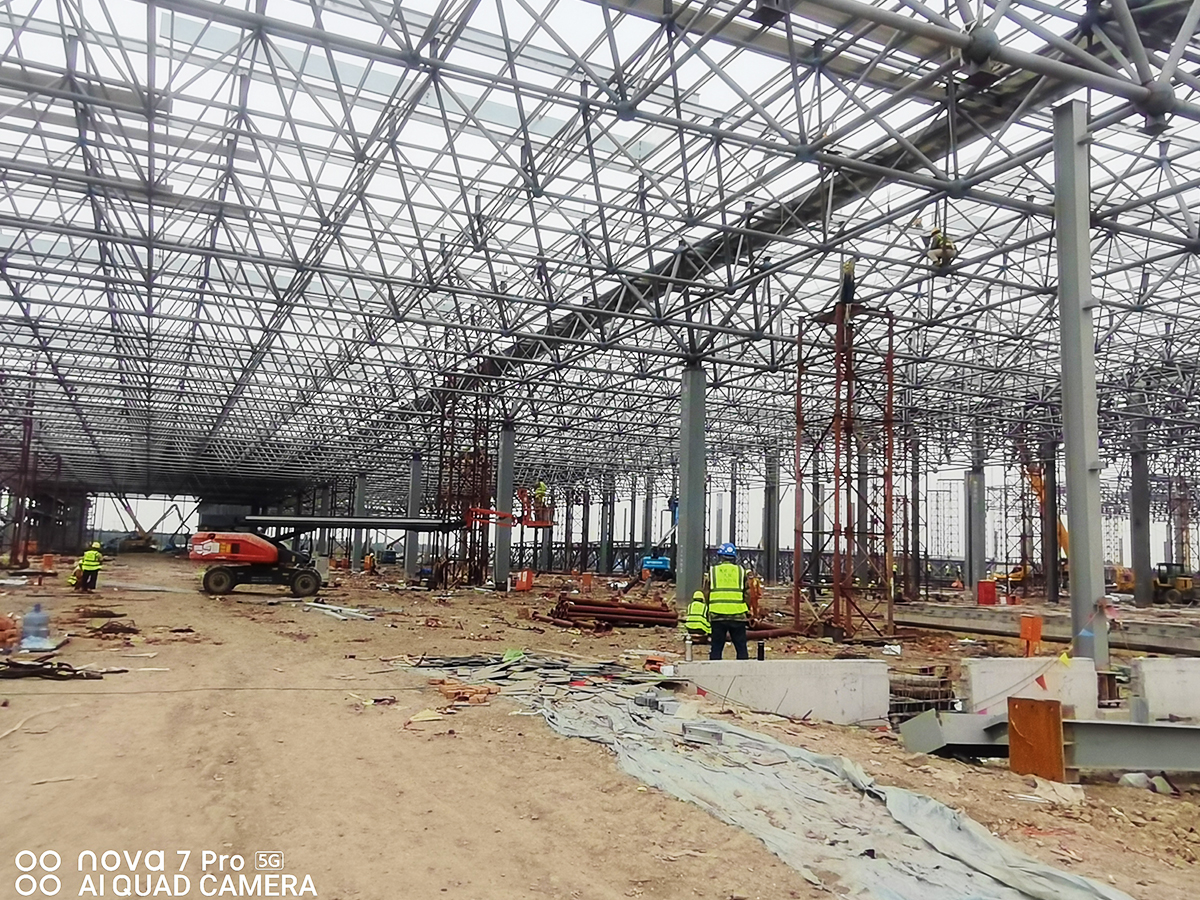
Different project types demand specific structural configurations. You must match the solution to the exact architectural need. Off-the-shelf designs rarely provide maximum efficiency. Let us explore the distinct categories and how engineering teams optimize them for specialized real estate sectors.
Logistics hubs and automated racking systems need massive, open spaces. Portal frame configurations maximize this unobstructed square footage. They completely eliminate internal support columns. This setup allows forklifts and automated conveyor systems to move freely. For these applications, clear-span designs are entirely indispensable. They give facility managers the ultimate flexibility to reconfigure assembly lines and storage racks without navigating around load-bearing obstacles.
High-rise structures face immense wind loads and lateral forces. Engineers often utilize composite systems to handle these extreme pressures safely. They integrate flexible framing with dense concrete core walls. This hybrid approach provides optimal lateral stiffness. It resists swaying and wind pressure effectively. You get the rapid assembly speed of metal and the unyielding rigidity of a dense elevator core, perfectly balancing performance and schedule.
Building Information Modeling (BIM) has changed fabrication forever. BIM seamlessly integrates with Computer Numerical Control (CNC) machinery on the shop floor. This synergy allows for true plug-and-play assembly on the job site. Pieces arrive pre-drilled, pre-welded, and perfectly sized. It reduces costly field rework to near zero. You assemble the building like a giant, highly precise puzzle, minimizing the chance of human error during erection.
We must address regulatory requirements and environmental realities objectively. Safety and compliance build essential trust among developers, civic authorities, and end-users. Meeting global standards ensures your asset remains viable for decades.
Earthquakes destroy rigid structures quickly. Metal possesses a unique, life-saving property called ductility. Ductility is the ability to yield and absorb extreme energy. During a seismic event, the frame bends rather than snapping. It withstands violent dynamic loads without experiencing sudden catastrophic failure. This energy dissipation saves lives and preserves the core asset, making it the mandated choice in highly active seismic zones globally.
We must be realistic about thermal vulnerabilities. Bare metal loses yield strength at high temperatures. It requires proactive protection. You must apply intumescent coatings or cementitious fireproofing. These treatments meet local building code compliances safely. Costs vary based on application thickness and visual requirements. Intumescent paint expands under heat, creating an insulating char layer that protects the core material effectively during a severe fire.
Modern production relies heavily on aggressive recycling. Electric Arc Furnace (EAF) production typically uses over 90% scrap metal to create new beams. By specifying this material, you vastly improve the carbon accounting for your asset. It directly contributes to coveted LEED certification points. A modern Steel Structure aligns perfectly with strict corporate ESG mandates, proving that heavy construction can operate sustainably.
Adoption carries distinct hurdles. Skeptics often point to specific risks regarding procurement and environmental wear. However, experienced construction management teams know exactly how to mitigate them efficiently before they impact the bottom line.
Global market fluctuations impact pricing and material availability. Sudden tariffs or supply shocks can derail a construction budget. You must employ early procurement strategies. Lock in mill orders during the Design Development (DD) phase. Do not wait for final construction documents to be issued. Securing materials early neutralizes much of this market volatility and guarantees your place in the fabrication queue.
Oxidation is an unavoidable chemical reality. You must protect the frame from rust. We evaluate mitigation costs based on specific environmental exposure. Coastal environments demand hot-dip galvanizing for ultimate salt-spray protection. Inland projects might only require high-performance epoxy paint systems. Choose the right protective coating to balance upfront application costs against long-term facility maintenance.
Rigid prefabrication leaves absolutely zero room for error. If foundation anchor bolts are misaligned by half an inch, the massive columns will not fit. Precise site surveys are absolute necessities. You must implement robust quality control protocols.
Here are critical best practices to avoid coordination failures:
Conduct rigorous 3D laser scanning of the entire poured foundation before steel arrives.
Use highly visible, standardized steel setting templates for all anchor bolt clusters.
Require the fabricator and concrete contractor to hold mandatory pre-pour alignment meetings.
Implement dual-verification checks by independent surveyors before the concrete fully cures.
A robust framework is not just a commodity material purchase. It represents a strategic investment in schedule certainty. You secure asset longevity and unmatched architectural design flexibility. When you commit to a well-engineered Steel Structure, you systematically eliminate project guesswork. You transition from hoping a project finishes on time to mathematically ensuring it does through controlled, off-site prefabrication.
Next steps require decisive action from leadership. Engage structural engineers immediately during your schematic design phase. Bring certified fabricators into the conversation early to leverage their practical insights. This collaborative approach maximizes your value engineering opportunities and locks in supply chains. Reach out to a trusted, certified fabrication partner today to schedule a comprehensive project consultation and begin defining your structural blueprint.
A: When engineered correctly, it has an indefinite lifespan. Provided the building envelope remains intact and facility managers adhere to proper maintenance and protective coating regimens, the framing will last for centuries without degrading structurally.
A: Realistic lead times typically range from 12 to 20 weeks. This timeframe heavily depends on global market conditions, mill availability, and project complexity. Early involvement and locking in procurement during the design phase are crucial to avoid schedule delays.
A: Upfront material costs may fluctuate and occasionally appear higher. However, total project costs are often lower. Faster erection times reduce expensive on-site labor. Lighter framing reduces foundational concrete requirements, and quicker completion allows for earlier tenant occupancy and revenue generation.
A: You protect against corrosion using heavy-duty epoxy paints or hot-dip galvanization, depending on environmental exposure. For fire protection, contractors apply intumescent paint that expands under heat, spray-on cementitious fireproofing, or utilize concrete encasement to maintain yield strength during extreme thermal events.


