
Views: 0 Author: Site Editor Publish Time: 2026-06-21 Origin: Site


Capital expenditure in commercial and industrial construction demands serious strategic alignment. You must aggressively balance upfront investments against strict time-to-occupancy goals and long-term asset flexibility. Developers and facility managers frequently face a critical crossroad during the planning phase. They must choose between the standardized, rapid deployment of a pre-engineered steel structure and the familiar, rigid mass of traditional concrete options like cast-in-place or tilt-up.
The objective reality is straightforward: neither material holds universal superiority across all projects. The optimal choice depends entirely on your specific clear-span requirements, regional climate constraints, and localized labor costs. This comprehensive guide breaks down exactly how to evaluate both building systems. We will show you which engineering approach best fits your intended facility lifecycle and regional variables, helping you safeguard your capital investment.
Speed to ROI: Pre-engineered steel structures typically reduce project timelines by 20–30% due to off-site fabrication and rapid assembly.
Cost Predictability: Steel minimizes on-site labor variables and weather delays, while concrete is highly susceptible to local labor rates and curing conditions.
Expansion Flexibility: Steel buildings are fundamentally modular, making future expansions significantly cheaper and less disruptive than modifying load-bearing concrete.
Application Fit: Steel dominates wide-span industrial and warehousing needs; concrete excels in multi-story residential (e.g., 6-story high-rises) and high-vibration manufacturing scenarios.
Before comparing performance metrics, we must clearly define how each construction method operates. These fundamental engineering differences dictate every subsequent project variable from budgeting to final execution.
Manufacturers design, model, and fabricate a pre-engineered Steel Structure entirely off-site. Factory environments provide strict quality control. Automated systems cut, weld, and drill the steel beams according to exact 3D models. Once fabrication finishes, trucks deliver the structural components to the job site. Construction crews then perform an immediate bolt-together assembly. This modular approach treats the building more like a large-scale industrial product than a traditional construction project.
Concrete construction remains highly site-dependent. Cast-in-place methods require massive amounts of temporary formwork. Workers must place intricate rebar grids, pour wet concrete, and wait for adequate curing time. Tilt-up construction modifies this process slightly. Crews pour flat wall panels on the ground slab. Once the concrete cures, large cranes lift these panels into a vertical position. Tilt-up shifts the pouring process to ground level. However, it still relies heavily on expensive on-site lifting equipment and favorable weather conditions.
Choosing between these materials fundamentally shifts your project risk profile. A pre-engineered Steel Structure moves project risk away from local site labor and pushes it onto supply chain lead times. You depend on the factory delivering materials on schedule. Conversely, concrete shifts risk away from the global supply chain. It places your project's success squarely on local on-site execution, regional labor availability, and unpredictable weather patterns.
Project stakeholders evaluate building materials across three primary dimensions. Let us examine how steel and concrete perform across speed, financial predictability, and future scalability.
Time directly impacts project profitability. Steel construction allows simultaneous workflows. Site preparation and foundation pouring occur on-site while the factory fabricates the steel framing. Once components arrive, assembly proceeds rapidly. Steel erection remains mostly weather-independent. This fast assembly creates a quicker dry-in time. A sealed building envelope allows interior finishing trades to start their work weeks earlier than traditional methods.
Concrete relies on a strictly sequential process. You cannot rush foundation trenching, pouring, and curing. Cast-in-place methods suffer from extreme vulnerability to temperature drops and heavy precipitation. Freezing temperatures halt concrete curing entirely. Rain ruins freshly poured slabs. These environmental variables make strict scheduling very difficult.
Upfront engineering costs differ significantly based on material weight. Concrete possesses a massive dead load. This immense weight requires heavier, deeper, and more expensive foundation systems. Steel structures remain relatively lightweight. Lighter frames reduce the required foundation depth, directly saving upfront concrete and excavation costs.
Facility maintenance and insurance requirements also diverge over time. Modern steel features advanced anti-corrosive coatings, but facility managers must schedule periodic structural inspections. Concrete offers excellent passive fire resistance. This inherent fireproofing potentially lowers baseline insurance premiums. However, engineers can apply intumescent fire-proof coatings to steel columns. This brings the Steel Structure up to equivalent commercial compliance codes, bridging the insurance gap.
Business needs change. Buildings must adapt. Removing a non-load-bearing end wall on a steel building is a standard procedure. Contractors simply unbolt the cladding, erect a new bay, and reattach the exterior panels. This provides a low-risk, highly predictable expansion path.
Modifying concrete walls presents a completely different reality. Expanding a concrete building requires extensive heavy demolition. Engineers must design complex structural reinforcement for the remaining walls. This process generates massive dust, noise, and significant operational downtime for the existing facility.
Performance Metric | Pre-Engineered Steel Structure | Traditional Concrete |
|---|---|---|
Time-to-Occupancy | Fast. Simultaneous off-site fabrication. | Slow. Sequential on-site pouring. |
Foundation Costs | Lower. Lighter dead load requires less concrete. | Higher. Massive dead load requires deep footings. |
Expansion Complexity | Simple. Bolt-on modular additions. | Complex. Requires heavy demolition and downtime. |
Weather Dependency | Low. Bolt-up assembly happens in most weather. | High. Freezing or rain halts curing completely. |
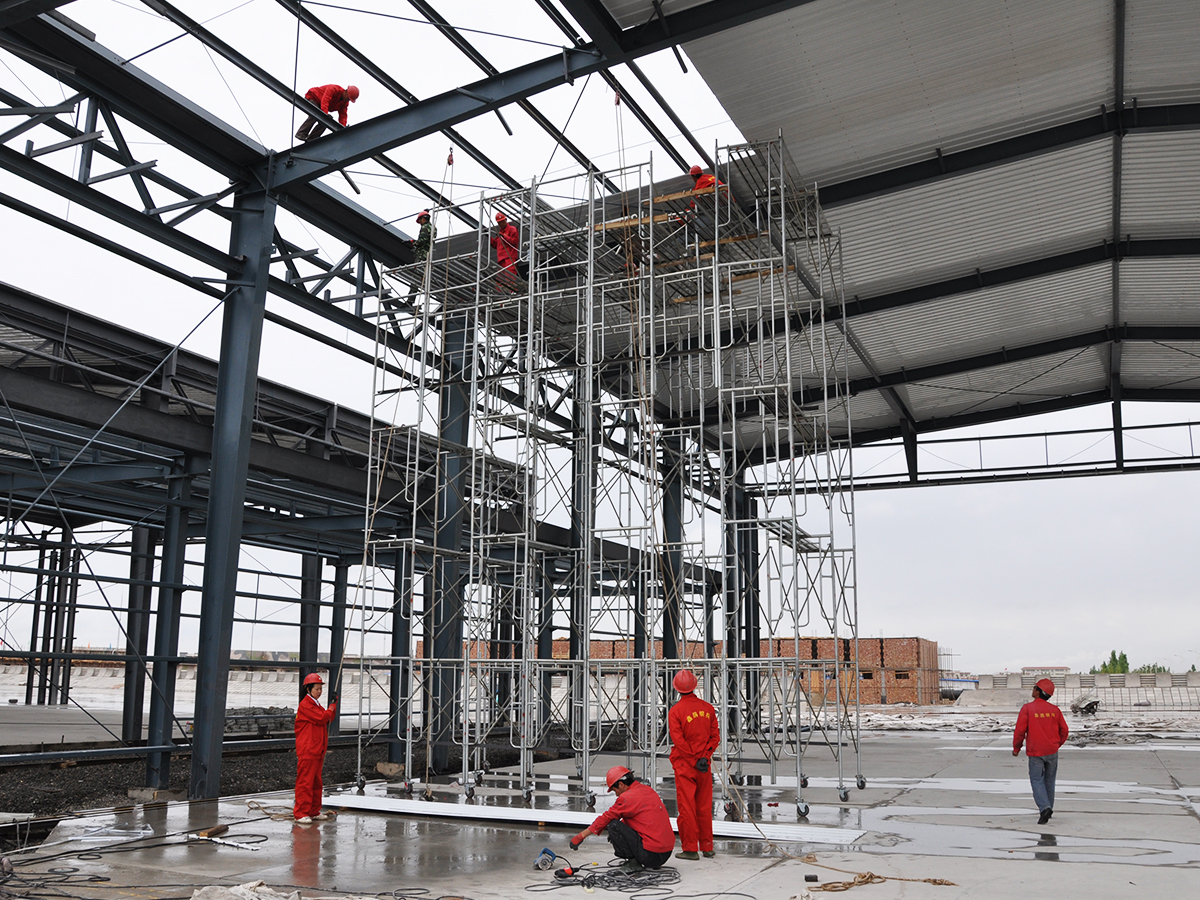
Certain industries and project conditions make steel the undisputed champion. A pre-engineered Steel Structure provides unique advantages in the following scenarios.
Warehousing and Logistics: Distribution centers demand massive clear-span interiors. Steel framing easily spans up to 300 feet without interior support columns. This unobstructed space maximizes forklift maneuverability and racking density.
Remote or High-Labor-Cost Regions: Finding a massive general labor force in remote areas is difficult and expensive. Steel assembly requires a smaller, highly specialized crew. This drastically mitigates local labor shortages and reduces payroll bloat.
Projects with Strict ROI Timelines: Retail centers and manufacturing plants tie early operational occupancy directly to revenue generation. When every week of delay costs millions in lost production, steel's rapid assembly protects the financial model.
High Seismic Zones: Earthquakes destroy rigid structures. Steel possesses a highly ductile nature. A Steel Structure flexes and safely absorbs seismic energy far better than a rigid concrete block building.
Best Practice: When planning a warehouse using steel, finalize your internal racking layout before ordering the building. This allows structural engineers to place the few necessary columns perfectly inside the racking rows, creating a virtually column-free operational floor.
Despite steel's efficiency, traditional concrete remains the superior choice for several specific applications. Concrete excels when mass, sound dampening, and extreme durability matter most.
Mid-to-High-Rise Residential (e.g., 6-Story Builds): Concrete provides superior inherent sound dampening between floors. High Sound Transmission Class (STC) ratings are vital for apartments and hotels. Concrete also provides robust compartmentalization. This makes meeting stringent residential fire codes much easier.
High-Vibration Heavy Industrial: Facilities operating massive drop-forges, stamping presses, or high-vibration machinery require immense mass. The sheer weight of a concrete foundation and shell absorbs kinetic energy effectively. Lighter structures would rattle excessively under these extreme industrial loads.
Extreme Security Requirements: Data centers, federal buildings, and chemical plants often face strict security baselines. Achieving required blast resistance and ballistic protection is far easier using thick, heavily reinforced concrete walls.
Common Mistake: Developers often assume tilt-up concrete works on any lot. They fail to realize tilt-up requires a massive open ground footprint to cast the panels flat before lifting. Tight urban lots usually rule out tilt-up entirely.
Every construction method carries distinct execution risks. Understanding these vulnerabilities allows project managers to implement proper mitigation strategies early in the design phase.
A pre-engineered Steel Structure requires finalizing the architectural and engineering design very early. Once the factory begins fabrication, late-stage structural changes become highly costly. Planners must also account for global material availability. Long lead times for specialized structural steel grades can easily bottleneck a project kickoff if not ordered months in advance.
We mentioned the spatial demands of tilt-up concrete. Beyond space, concrete demands massive water access and continuous heavy truck traffic. Urban environments often restrict the number of concrete mixing trucks allowed on city streets per hour. These logistical bottlenecks stretch pouring schedules and inflate traffic management budgets.
Building codes dictate structural integrity based on geography. Local snow loads in northern regions dictate the required roof pitch and the steel gauge thickness. Failure to align the steel specification with regional wind or snow load codes during the early procurement phase will instantly halt local permitting. Concrete faces similar climate hurdles. Curing concrete in extreme desert heat requires continuous water misting to prevent surface cracking.
System | Primary Risk Factor | Mitigation Strategy |
|---|---|---|
Steel | Late-stage design changes. | Implement strict design-freeze milestones before factory ordering. |
Steel | Supply chain lead times. | Procure steel packages 3-6 months ahead of site prep. |
Concrete | Weather delays during pouring. | Budget for weather-protection enclosures and heating/cooling equipment. |
Concrete | Tight site logistics. | Switch from tilt-up to cast-in-place or precast panels delivered by truck. |
Choosing between a steel structure and concrete does not have to rely on guesswork. Follow this structured three-step framework to determine the most viable path for your next development.
Step 1: Define the Spatial Requirement. Evaluate your internal operational needs first. If your operations require massive, column-free floor space for machinery or logistics, default to steel. If your business model requires tight, multi-story compartmentalization and soundproofing, lean toward concrete.
Step 2: Audit Local Variables. Run a localized financial comparison. Evaluate current regional ready-mix concrete prices against factory steel shipping costs. Simultaneously, audit local union labor rates. Finally, map out the expected weather conditions during your projected build window. High labor costs and winter builds heavily favor steel.
Step 3: Forecast the Asset Lifecycle. Look beyond the ribbon-cutting ceremony. Are you likely to expand the facility footprint in 5 to 10 years? A steel building provides a vastly easier, cheaper upgrade path. If the building is a permanent, multi-generational static asset, concrete becomes highly attractive.
Applying this framework ensures your material selection aligns directly with operational goals rather than architectural bias.
Final Verdict: The "better" choice does not exist in a vacuum. The optimal material is the one aligning perfectly with your specific risk tolerance, capital deployment schedule, and daily facility use-case.
Speed vs Mass: Choose pre-engineered steel for rapid ROI, clear-span flexibility, and predictable factory quality. Choose traditional concrete for multi-story residential acoustics, high-vibration stability, and extreme security.
Next Steps: Do not commit to preliminary architectural blueprints yet. Engage a structural engineer or a design-build contractor immediately. Request a localized cost-benefit analysis comparing a pre-engineered steel frame against concrete specifically tailored to your exact lot constraints and local building codes.
A: Both can easily exceed 50-100 years. Steel requires rust-inhibitive maintenance and roof lifecycle management, while concrete requires sealing against moisture penetration and spalling.
A: Yes. Pre-engineered buildings are custom-designed to meet or exceed localized building codes for snow and wind loads by increasing the structural frame's thickness and adjusting roof pitch.
A: It depends on scale. Tilt-up becomes cost-competitive on massive, box-like structures (over 50,000 sq ft) where local concrete is cheap and land is abundant for on-site casting. For anything smaller or requiring complex geometry, steel usually wins.
A: Typically reinforced concrete or a hybrid approach (concrete core with structural steel framing). Pure pre-engineered steel is rarely optimal for mid-rise residential due to acoustic transmission and multi-floor fire suppression complexities.


